
This month’s Signal comes as we absorb what we learnt in London, where a week of packed Climate Action Week sessions turned words into action – from sessions on how smarter international standards can bring low-carbon materials to market, to a roundtable examining what’s needed to make concessional finance truly catalytic.
Beyond London, Build Clean Now’s Australia workshop has evolved into a live Clean Deal Monitor already shaping government policy, and a new India-Europe green ammonia trade corridor shows what a genuinely global value chain can look like.
And with 2026 shaping up as clean industry’s year of acceleration, we’re already planning our next move: an Industry Acceleration Summit in New York later this year. More on that below.
Reflections from London
By Faustine Delasalle, CEO MPP, Executive Director of the ITA
Two weeks in London – first for London Climate Action Week, then for our mid-year team retreat – left me energised rather than worn down. Despite the dramatic acceleration of climate impacts, there is hope in the ongoing scale-up of climate solutions.
It’s why we were proud to back the #ElectrifyNow campaign launched at LCAW. Clean electrification is the fastest, cheapest route to cutting emissions and living in a less polluted world. But a quarter of global emissions sit in the hard-to-electrify sectors in which we work – materials, chemicals, long-distance transport fuels – and getting those moving in the right direction is the other critical pillar of the energy transition. Closing that gap is why MPP exists.
The case for clean industry keeps getting stronger: resilience, energy and food security, economic sovereignty and competitiveness. These are all arguments that not so long ago would have felt difficult to land but are now common currency in boardrooms and ministries, particularly in light of the continuing disruption around the Strait of Hormuz. These messages compound with what remains a climate imperative.
Clean electrification keeps getting cheaper, which is the real breakthrough of recent years, but it still requires major investments now, including in the grid. So does the shift to clean industrial systems, which also comes with some ongoing costs, concentrated in a handful of sectors. We cannot hide from that. Managed well, the cost to consumers is small, and it’s the best insurance we have against the far bigger shocks that volatile fossil fuel markets and extreme climate events keep handing us.
So as today’s unprecedented heatwaves demonstrate, things are getting worse. But, as our latest Global Project Tracker numbers show, they’re also getting better, even in energy-intensive industries. Taking both directions into account is why LCAW is important: it’s space to trade frank views with trusted peers, celebrate progress, and learn from each other what works best. Spending time with our MPP team whose expertise, energy and creativity I admire, left me in no doubt we’re building the path as we walk it.
London Climate Action Week: building tomorrow’s industries today
Over London Climate Action Week, MPP convened sessions on unlocking investment across the clean industry supply chain; examining the role of mass balance and book & claim systems in decarbonising heavy industry; and looking at how concessional finance can become truly catalytic for early-stage clean industrial projects. With China alone now accounting for 45% of all clean industry FIDs to date, our flagship session’s central question – what’s holding the rest of the world back from reaching final investment decisions – felt more pressing than ever.
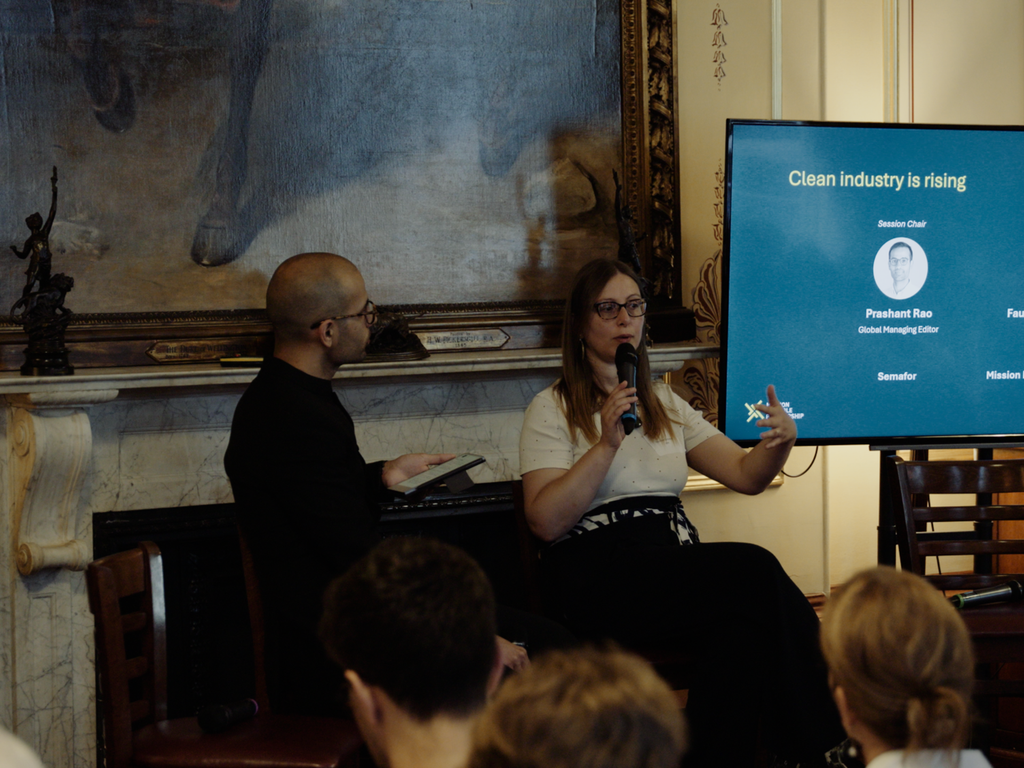
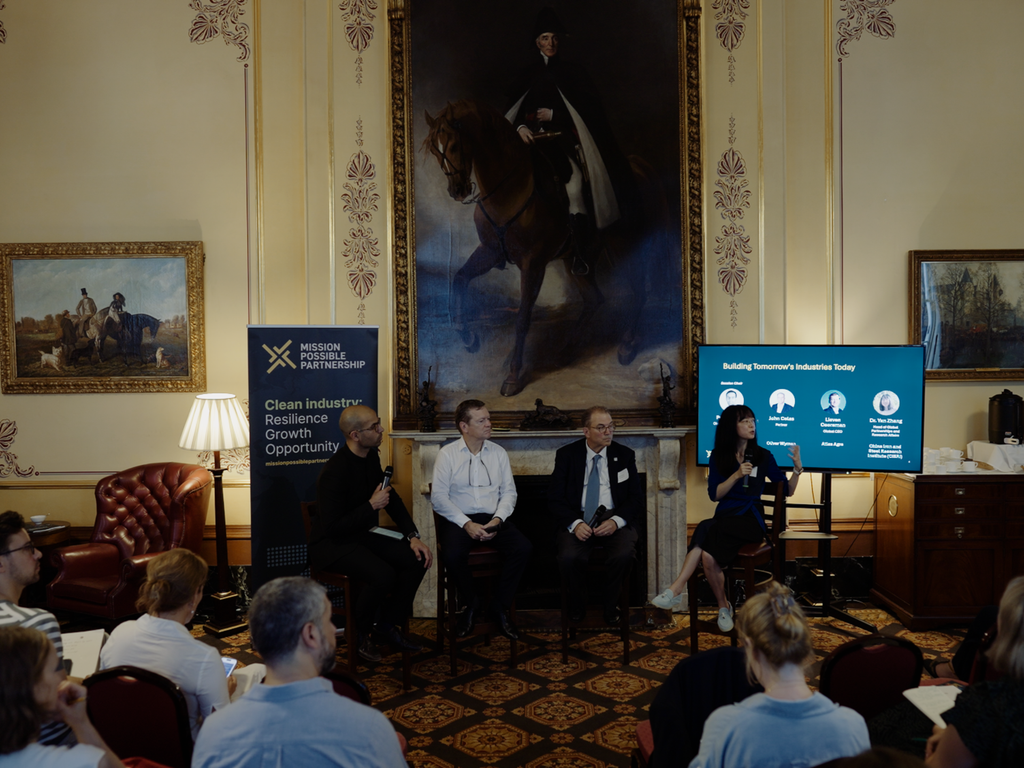
At our flagship session, Building Tomorrow’s Industries Today, expertly chaired by Prashant Rao, Global Managing Editor at Semafor, our guests debated what’s really holding projects back from final investment decision.
MPP’s Faustine Delasalle set the scene with the positive news from our latest Global Project Tracker – investment into clean industry is now accelerating – and explained the trends informing those statistics.
Lieven Cooreman, CEO of Atlas Agro, pointed to catalytic capital as the single biggest barrier for his green fertiliser project in Brazil – ahead of access to power, regulation or offtake agreements. John Colas of Oliver Wyman pointed to political risk insurance as an underused tool for unlocking bank lending. Those banks will step up and inject finance, John advised, once the return on investment is clear.
Dr Yan Zhang, of the China Iron & Steel Research Institute Group, offered a series of fascinating insights into China’s leadership across clean industrial sectors: the country’s long-term planning system – with strict targets – has played a key role in an acceleration in developing hydrogen metallurgy in steel. There followed an engaging discussion with the audience, highlighting both the significant challenges which remain in attracting funding into clean industrial projects – and some of the solutions that can help accelerate the number of final investment decisions year-on-year and eventually lead to the tipping points that are so urgently needed.
Our thanks to the audience who battled through the heat to fill the room – and particularly to our host, Semafor’s Prashant Rao.
Keep an eye on our LinkedIn for clips from the session; and we highly recommend signing up to Semafor’s email briefings for the latest international energy and industry developments.
Decarbonising heavy industry through mass balance and book & claim systems
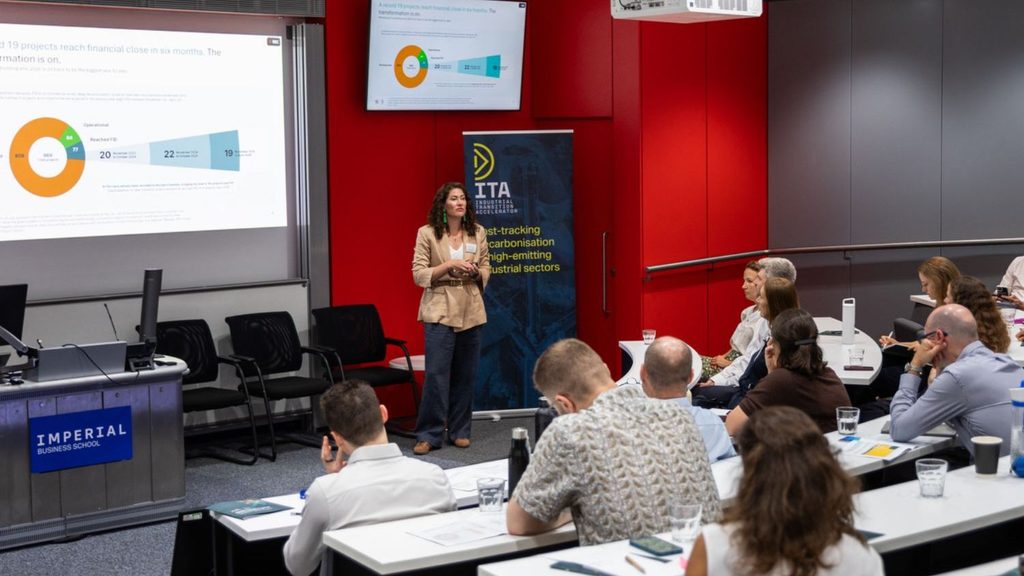
MPP brought together stakeholders from across heavy industry to discuss how we ensure mass balance and book & claim systems accelerate deep decarbonisation of heavy industry while mitigating risks and unlocking demand.
Mass balance and book & claim are accounting systems that let companies track and sell the ‘green’ share of a product – like low-carbon steel or sustainable fuel – even when it’s physically mixed with conventional volumes somewhere along the supply chain. Think of it like buying renewable electricity: you can’t isolate the exact green electrons reaching your socket, but you can pay for, and claim, clean power fed into the grid on your behalf.
Hosted by Imperial College London’s Leonardo Centre, around 60 attendees discussed how innovative chain-of-custody systems are being explored and implemented across high-emitting sectors.
MPP and RMI presented how mass balance and book & claim systems can provide producers and buyers with greater flexibility in assigning environmental attributes, such as greenhouse gas emissions reductions or recycled content, to traded products. Two panel sessions debated how these approaches can help stimulate early demand for low‑emission materials and products, particularly where physically segregated supply chains are costly, complex, or not yet feasible.
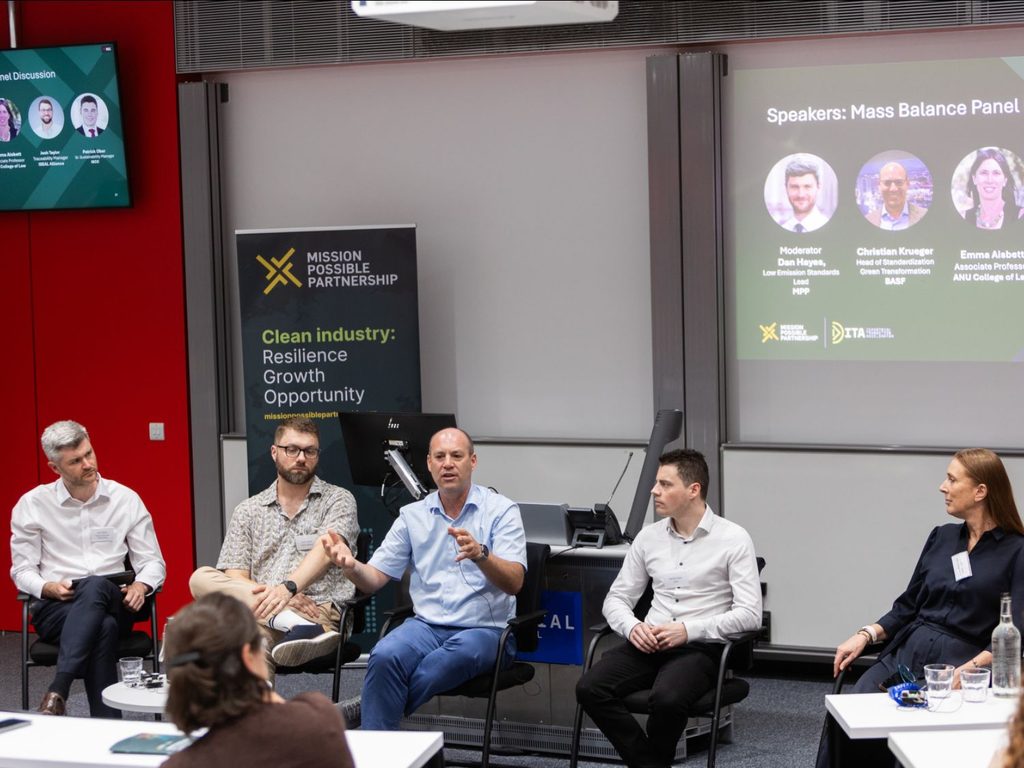
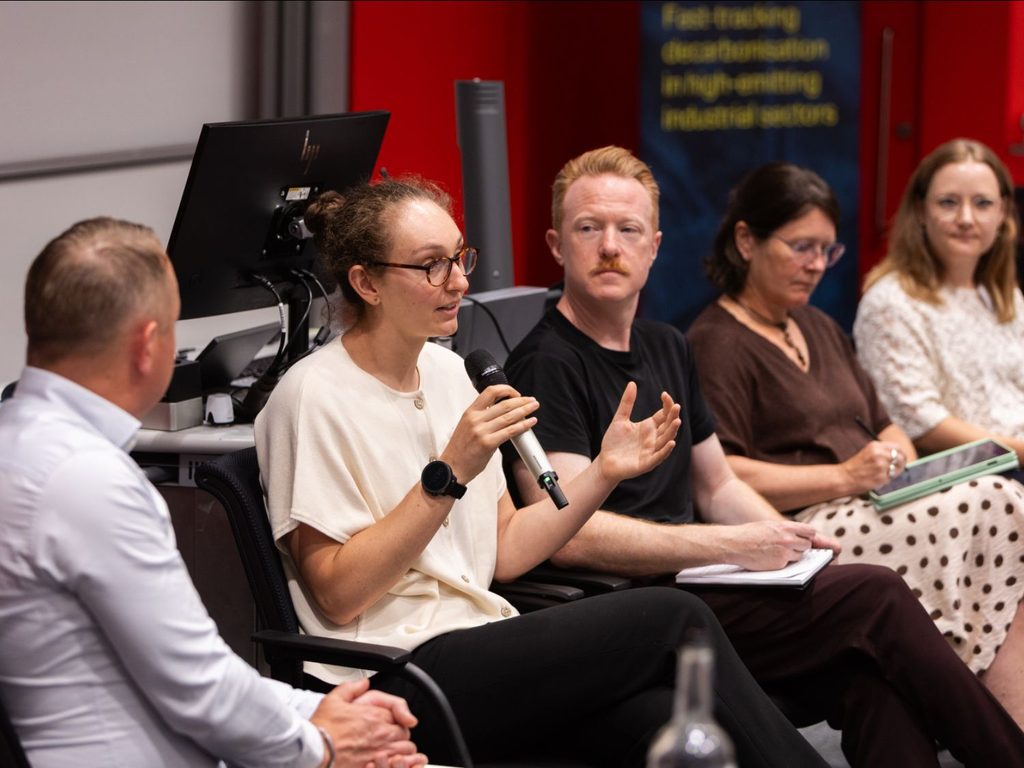
The audience heard how transparency and accuracy of these systems is essential for credible claims to be made about lower carbon products, especially as the physical link between the product and the lower emissions input become distant or even separated.
MPP will publish a paper in the next few weeks on the principles and guardrails for mass balance systems, providing readers with a clear understanding of how systems are designed and what makes a credible low-carbon product claim. In future, more sector-specific investigations are essential to understand which sectors actually require mass balance approaches to enable decarbonisation.
Concessional Finance: a defining moment to accelerate clean industry projects
Together with the Climate Investment Funds (CIF) and the European Bank for Reconstruction and Development (EBRD), the ITA convened a roundtable on the role of concessional finance, attended by public and private financial institutions and project developers.
Participants discussed the significant challenges faced by early clean industrial projects due to both market risks associated with the nascent nature of emerging value chains, and project-specific risks.
The conversation explored how concessional capital could become truly catalytic, by addressing these risks through dedicated mechanisms; for example development funding for projects. Private finance also has a role to play: by partnering with concessional finance to address technology and investment risks via dedicated financial mechanisms they can accelerate the deployment of capital to clean industrial projects.
Other LCAW highlights
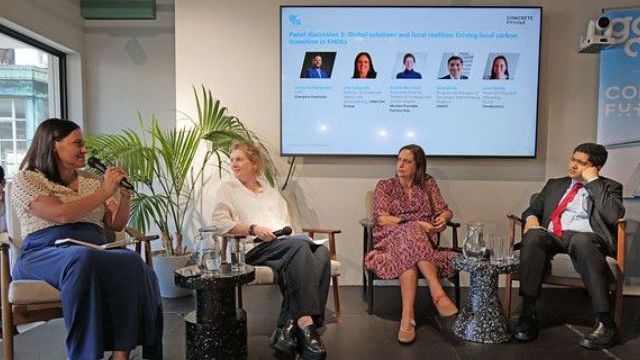
Alongside our own sessions, MPP contributed to a number of events throughout the week, including the Global Energy Transition and Electrification Summit – hosted by the UK Government, the Global Renewables Alliance, E3G, the We Mean Business Coalition and MPP; the World Green Building Council Global Solutions Forum, the COP31 Business Forum Launch, the LCAW2026 flagship Climate Innovation Forum, and the Energy Transitions Commission’s Commissioners Meeting.
We were also pleased to partner with the Global Cement and Concrete Association on convening Building the Sustainable Future: Pathways to Low-Carbon Cement and Concrete. There, our panel Global Solutions and Local Realities: Driving Local Carbon Transition in EMDEs explored how to translate global net-zero ambitions into practical, country-specific action, bringing together speakers from industry, multilateral organisations and the non-profit sector to discuss the on-the-ground solutions needed to deliver low-emission cement and concrete at every scale.
Build Clean Now: Australia shows what’s possible – and more countries are coming
The first Build Clean Now workshop took place in Sydney in late 2025, bringing together project developers, offtakers, financiers and policymakers in one room to discuss barriers and pathways to final investment decision.
The discussions quickly turned to potential solutions to offtake and financing decisions, with a focus on creating lead markets, green market makers, revenue certainty mechanisms and guarantees.
Since the workshop and subsequent Build Clean Now briefing paper: Clean industry spotlight | Australia, MPP and ITA have launched a ‘Clean Deal Monitor’, providing greater transparency into the project pipeline, sources of momentum and persistent barriers. The deal monitor has helped to define cohorts of projects by maturity, focus policymaking efforts on high-impact interventions, and uncovered where a lack of policy certainty was inhibiting projects from raising development funding.
Australia’s Investor Front Door and Climate Change Authority have begun to use the deal monitor data in their respective roles, with the Climate Change Authority including it in their recent consultation to inform their annual advice to parliament.
Australia is well-positioned to capitalise on the opportunities presented by clean industry, and was just the first in a global series of Build Clean Now country workshops running through the year. Over the coming months, we will convene developers, policymakers and financiers in South Africa, Türkiye, Spain, Mexico and Canada, with more on the horizon.
If you’d like to learn more, please contact Kate.Levine@missionpossiblepartnership.org
Meet the Bright Spots: AM Green Kakinada, India – opening a new India-Europe ammonia trade corridor
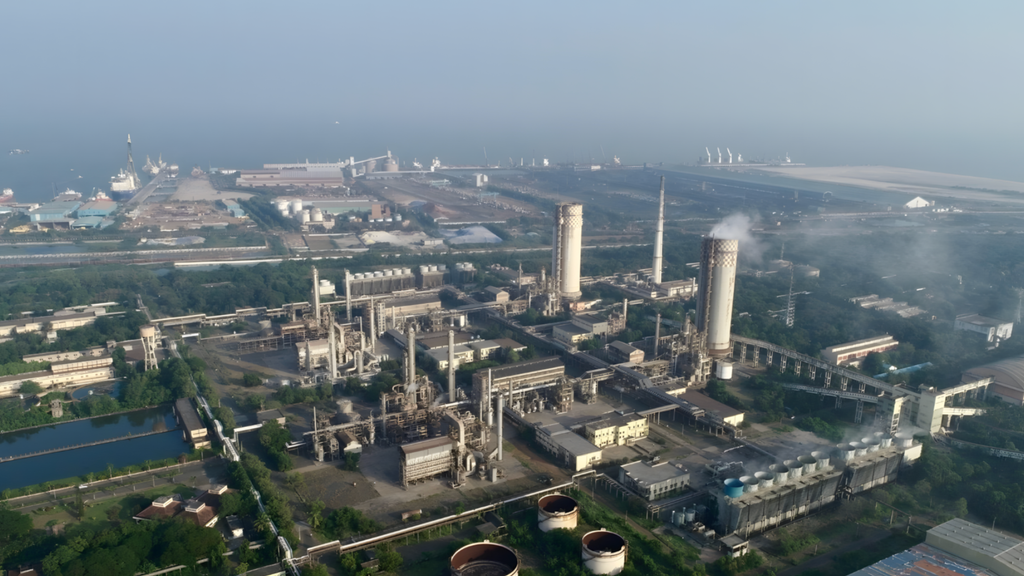
AM Green’s Kakinada facility, in Andhra Pradesh, India, is one of the first large-scale green ammonia plants in the world and India’s only facility to meet the EU’s RFNBO requirements. Converting a brownfield ammonia and urea plant that previously ran on gas, the plant is under construction and targeting first commercial production in 2028, with a capacity of 1.5 million tonnes per year at full build-out – enough to avoid around two million tonnes of CO2 emissions annually once fully operational.
The project’s anchor offtake is a 500,000-tonne contract with German energy company Uniper, since followed by further contracts with Yara, RWE and BASF. Sister company Greenko supplies round-the-clock renewable power via pumped hydro storage, while European suppliers – Belgium’s John Cockerill (electrolysers), Switzerland’s Casale (ammonia synthesis) and Air Liquide (air separation) – were chosen deliberately to build credibility with the European offtakers the project was always targeting.
“There’s a lot of European partnerships here,” says AM Green CEO Gautam Reddy. Damien Eyries, CEO of delivery partner Rely (a Technip Energies-John Cockerill joint venture), says combining technology development with project execution in a single point of contact was key to cutting capital costs by up to 20%: “We need offtake … If the rules of the game are not set in stone, it’s quite difficult to develop the large projects.”
Uniper’s SVP New Energies, Benedikt Messner, says the company deliberately targeted ammonia first because “the willingness to pay is higher and the need for subsidies therefore lower” than in harder-to-abate sectors.
The project is also a live case study in the “holistic value chain” approach: it shows how a sunbelt economy with cheap renewable power, European technology and European demand can combine to make a project bankable producing clean commodities for export and domestic markets.
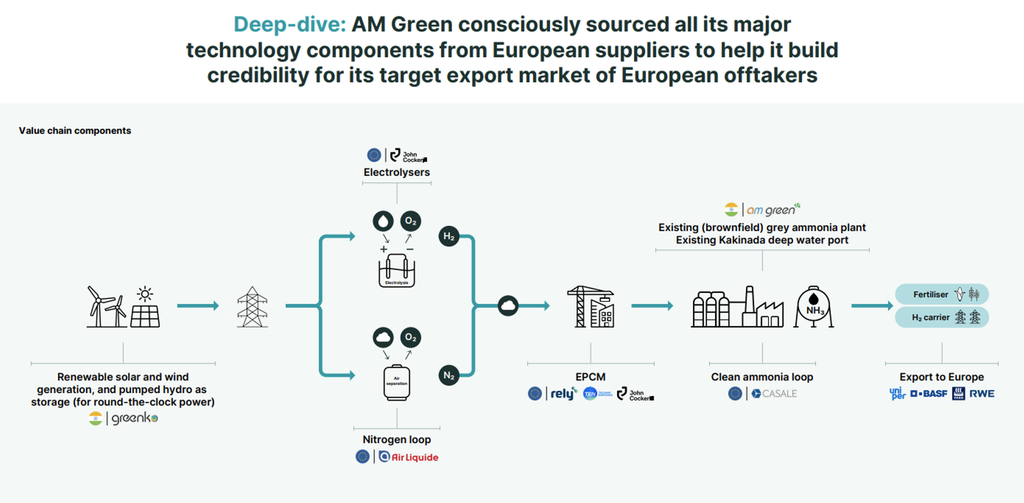
Read the full case study in the Global Project Tracker report, and explore more Bright Spots here – our spotlight on clean industry pioneers.
Go deeper – read our analysis of the latest Global Project Tracker data: Clean industry rising: the foundation of resilient value chains
UPCOMING EVENTS AND PARTNERSHIPS
Watch this space: MPP and ITA are planning an Industry Acceleration Summit in New York later this year, bringing together industry, finance and policy leaders to push clean industrial projects over the line. Details are still taking shape – get in touch if you’d like to be part of it: filippo.guarnieri@missionpossiblepartnership.org
Hear more from Mission Possible Partnership at events and access tickets on related conferences from our partners.
- Brussels Climate Week (12-16 October, Brussels, Belgium)
- MPP is proud to be a partner of Industry Day at Brussels Climate Week 2026. You can secure your place at this registration link.
You can find our team on the ground at the following events:
- 15th China International Steel Congress (19-20 September, Shanghai, China)
- Climate Week NYC 2026 (20-27 September, New York, United States)
- Economist Enterprise: 6th annual Sustainability Week Europe (5-6 October, Amsterdam, Netherlands)
- The Future of Green Steel 2026 (28-29 October, London, UK)
For any enquiries, please contact:
filippo.guarnieri@missionpossiblepartnership.org