For the aviation sector, the transition to sustainable fuels is just getting started, but it is one of the areas where progress is fastest, with eight projects reaching FID in the past 18 months.

For the aviation sector, the transition to sustainable fuels is just getting started, but it is one of the areas where progress is fastest, with eight projects reaching FID in the past 18 months.
With the physics of air travel ruling out electrification as an option for all but short-haul flights, it is clear that the key to decarbonising air transport lies in sustainable aviation fuel (SAF).
This can be produced from a number of feedstocks and most first generation SAF has been produced from waste fats, oils and greases through a process known as HEFA (Hydroprocessed Esters and Fatty Acids). While this has kick-started the industry, it is widely acknowledged that there will not be enough feedstock for HEFA-based SAF to meet the needs of the industry.
And so the industry is already looking beyond oil-based feedstocks for second-generation fuels. One of the most promising – and advanced – technologies is alcohol-to-jet (AtJ), which has a number of production facilities in the pipeline, with multiple announcements since 2024. AtJ’s advantage is that it uses ethanol, which can be produced using a wider range of feedstocks including municipal waste and industrial emissions, giving it flexibility to use the resources most available in different regions.
One of the leaders in SAF – across a range of technologies and in AtJ in particular – is LanzaJet, which was spun out of the carbon recycling company, LanzaTech, to enable it to focus entirely on scaling up production of second-generation SAF. “We had created a company that was scaling the biotech to make ethanol from wastes and the skills that we needed to scale alcohol to jet were different to what we had at the time, so our goal was to create a separate company to focus on that,” says Freya Burton, LanzaTech, Chief Sustainability Officer.
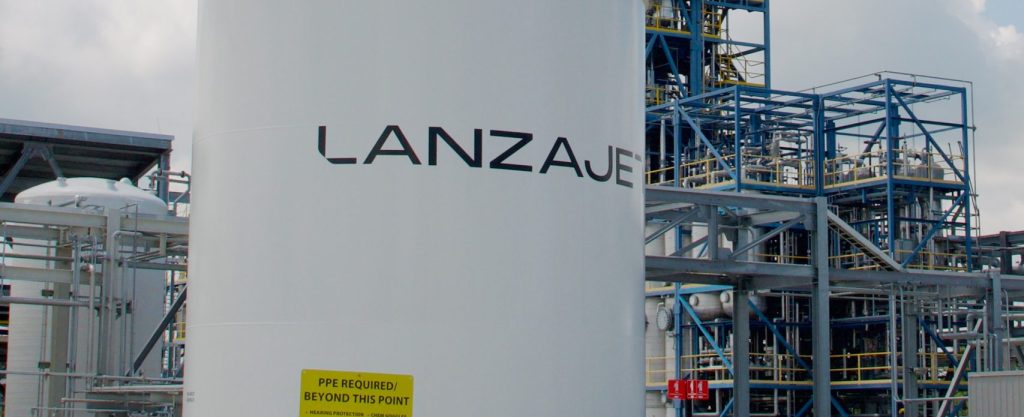
LanzaJet has an exclusive licence to use its technology to produce AtJ, a pathway that LanzaTech started developing in 2010 and received ASTM approval for in 2018, when the first proving flight with SAF took off from Orlando to Gatwick.
LanzaTech itself is focused on capturing emissions from sources including industrial facilities, direct air captured carbon, agricultural and forestry wastes, regenerative energy crops and municipal solid waste and turning that into ethanol. Then LanzaJet takes the ethanol and converts it into drop-in SAF using a proprietary ethanol-to-SAF technology process.
This fuel has, on average, 85% lower life cycle emissions than conventional jet fuel and it can be carbon-negative depending on the feedstock.

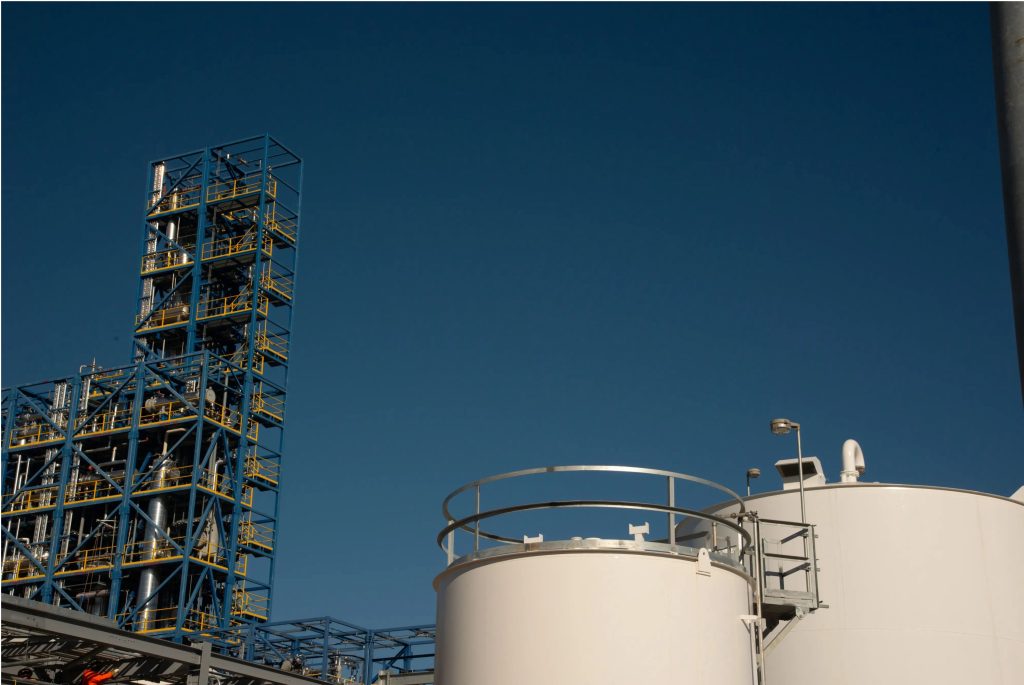
LanzaJet has opened the world’s first facility to produce SAF from ethanol, the Freedom Pines Fuels project in Georgia, USA. It believes that its first mover advantage – and the experience it is gaining in actually running a production facility – will provide valuable lessons for scaling up AtJ. It is innovating not just in the production process but also in its business model. It is offering an AtJ-as-a-service tolling model. Investors secure feedstock and send it to Freedom Pines Fuels, where LanzaJet processes it to produce jet fuel and then provides it to an offtaker, who is often the investor. “It’s kind of like bringing your ingredients to a bakery, paying the baker to bake the cake and then taking the cake back,” says Meg Whitty, LanzaJet, VP Corporate and Government Affairs. “This reduces risks for the parties involved. It guarantees access to production capacity, you own the feedstock and you own the finished product. It creates more predictable costs and transparent margins.”


It also enables LanzaJet to share the significant technology risks it is taking with its investors and gives it reassurance that it will have buyers for its SAF production. The company’s partners include Shell, British Airways, Microsoft, Mitsui, Airbus, Southwest, ANA and MUFG, a roster of heavyweight investors that can support it with offtake, logistics, financing and market credibility. “It’s been critical for us to pull in partners up- and downstream and across the entire value chain that really understand this market and can help us build it,” says LanzaJet’s Meg Whitty.
One of its most important partners is IAG, parent group to airlines including British Airways and Iberia. It was a first mover among airlines in developing SAF projects and has a target to achieve 10% SAF usage by 2030 and net zero emissions by 2050. It says that it is taking a diversified approach, spreading its risks across different geographies, technologies and suppliers.
But its offtake agreement with LanzaJet, in which it is also an investor, is a crucial vote of confidence in the company and in AtJ as a technology. “We think that advanced SAF using waste biogenic materials is a better way of doing it,” IAG’s Jim Davies, Programme Director – Sustainable Flight says. “And that’s why we invested heavily into Freedom Pines Fuels.”
Demand for SAF has been underpinned by mandates in a number of markets, particularly the EU and the UK, but also a number of Asian countries such as Singapore, Japan, India and Thailand. IAG’s offtake agreement with Freedom Pines Fuels allows its British Airways subsidiary to secure a supply that will help it meet the UK’s second generation SAF mandate, which prioritises waste residues (household waste, forestry residues) and AtJ technologies.
Mandates have been successful in spurring supply growth – the EU’s ReFuelEU Aviation mandate requiring SAF blending to rise from 2% in 2025 to 6% by 2030 and 70% by 2050 has created predictable, binding demand and that has translated directly into project investment. The cumulative production capacity of projects past FID has more than doubled since the mandate was introduced in 2023. However, there is still some disquiet about the design of mandates and their implementation. “Mandates are helpful, but they can be quite distortive if countries have mandates but regulate in different ways,” says IAG’s Jim Davies.
Nonetheless, for LanzaJet, Freedom Pines Fuels is very much the starting point, with further projects under way in the UK, Australia, New Zealand, Japan and India and with LanzaTech also building integrated ethanol to SAF plants in the UK and an ATJ facility in Belgium (across from the ArcelorMittal ethanol production facility, Steelanol, that uses LanzaTech technology to make ethanol from steel mill emissions).The recent geopolitical upheaval has again surfaced the importance of domestic energy security, Meg Whitty of LanzaJet adds, “It creates a sense of urgency around the necessity of airlines and fuel producers being local.”
Challenges remain in scaling up SAF production, including market risk, political and regulatory uncertainty and the need for offtake agreements
to unlock capital and scale up production in a sector that works on much shorter timeframes when it comes to sourcing fuel.
And yet drivers of the sector are strengthening –
in a world of increasing geopolitical volatility, home-grown SAF production using domestic feedstocks has real benefits in terms of security of energy supplies, economic resilience and protection from price shocks. LanzaTech, LanzaJet and their partners have shown what is possible, if projects like this are replicated, they will not just bring resilience but will open huge economic and industrial opportunities for communities worldwide.