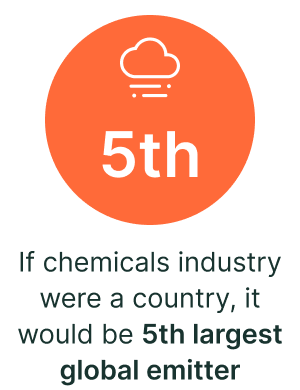
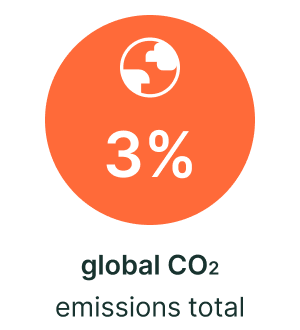
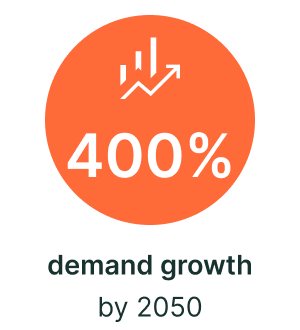
Transforming Chemicals

Transformation of the most widely used chemicals | critical factors
  • Ammonia: scaling up the use of green hydrogen production, with smaller roles for blue hydrogen and alternative pathways like methane pyrolysis and biomass-based hydrogen
  • Methanol: replace natural gas with a clean energy source such as green hydrogen or biomass; use synthetic CO2; capture process emissions
  • High-value chemicals like plastics: use alternative production methods such as bio-ethanol dehydration; capture and store cracker emissions; and increase recycling to reduce the need for virgin plastic production

Global burden of ammonia production

Industry-endorsed strategy for ammonia

In 2022, we developed an Ammonia Sector Transition Strategy in collaboration with a diverse set of industry leaders. This provides a shared vision for a clean ammonia future, modelling of pathways, real economy milestones and the industry, policy and finance actions required to get there. Assumptions have not been updated since publication, but the STS still represents a quantitative reference point.

Sector Transition Strategy documents

Report | Making net-zero ammonia possible


Industry-backed 1.5°C aligned transition strategy download


Pathways to net zero interactive modelling
Model code github

Sponsored by: Energy Transition Commission, RMI, We mean business Coalition, World Economic Forum

Further reading | Chemicals

Reuters Events: Global Energy Forum 2026 brings together 600+ senior leaders from across energy, finance, technology and policy to address the decisions reshaping global energy markets.

A rare bit of positive news in a turbulent year: clean industry investment is accelerating. Data from our newly-published Global Project Tracker update shows that 19 commercial-scale clean industrial projects reached final investment decision in the past six months – more than double the pace of a year ago.

Kassø, in southern Denmark, is now home to one of the world’s first operational e-methanol facilities, producing 42,000 tonnes per year from a 304 MW solar park, a 52 MW electrolyser and biogenic CO₂ captured from a local biogas facility. It reached FID in January 2022 without operating subsidies and started operations in 2025.

More to Explore

Tuesday 1st October, Washington, DC; The Hague: Mission Possible Partnership (MPP) announces the appointment of Dick Benschop as the new

Repsol’s Ecoplanta project in Tarragona reached final investment decision (FID) in January 2025 and will pioneer the commercial-scale production of

For the aviation sector, the transition to sustainable fuels is just getting started, but it is one of the areas

Faustine Delasalle, CEO Mission Possible Partnership and Executive Director, the Industrial Transition Accelerator 2025 has been a year of quietly

Subscribe to our newsletter

Discover how we advance clean industry transformation globally, be first to know our latest news, projects, reports and events. 

Unsubscribe at any time.

"*" indicates required fields

Name*
Your area of activity

Download

Please enter your email to download our reports

Unsubscribe at any time.

"*" indicates required fields

Name*
Your area of activity

Download

Please enter your email to download our reports

Unsubscribe at any time.

"*" indicates required fields

Name*
Your area of activity

Download

Please enter your email to download our reports

Unsubscribe at any time.

"*" indicates required fields

Name*
Your area of activity

Download

Please enter your email to download our reports

Unsubscribe at any time.

"*" indicates required fields

Name*
Your area of activity

Download

Please enter your email to download our reports

Unsubscribe at any time.

"*" indicates required fields

Name*
Your area of activity