
Sometimes, it can be hard to see progress while in the thick of work – fostering clean industry is no exception, and we’re often playing a long game. This month’s edition of Signal, however, shows what’s possible both in the long-term through sustained partnership: with learnings from our years working in the US on Clean Industrial Hubs and in the short-term with the quick wins that can be made through drop-in solutions like calcined clay in cement production.
- Our CEO Faustine Delasalle outlines the combined learnings from California and Texas
- The ITA has selected seven new clean industrial projects to support in partnership with the Brazilian Ministry of Development, Industry, Commerce, and Services (MDIC)
- We explore the findings from our white paper with Systemiq on how to accelerate the production of and demand for calcined clay for lower-carbon cement
Clean Industrial Hubs accelerating projects to FID through a hubs model – MPP CEO Faustine Delasalle
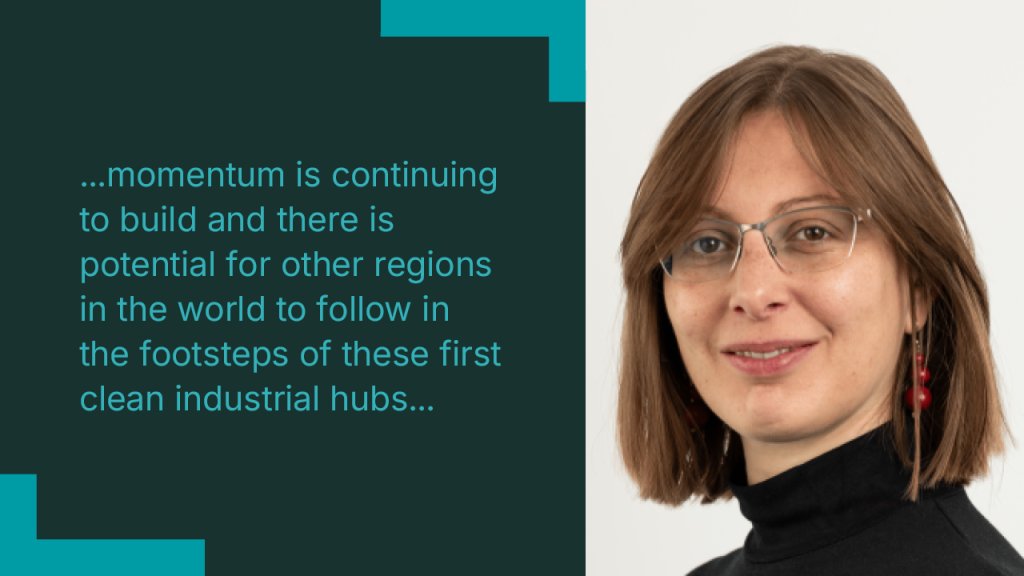
Faustine Delasalle, MPP CEO and Executive Director of the ITA
Over the last few months, as we were deciphering the trends on the next generation of clean industry projects coming through on our Global Project Tracker, a lighthouse initiative that focused on unlocking first-of-a-kind (FOAK) projects in the US came to its conclusion.
Pioneering new industrial processes is challenging, but at Mission Possible Partnership, lifting barriers to action is part of our DNA. Back in 2022, we saw an opportunity to do this by leveraging the power of clean industrial hubs to fast-track FOAK projects.
Our hypothesis then, now supported by direct observation, was that collaboration among companies co-located in industrial hubs could address critical barriers to investment.
Setting out to prove it, we partnered with RMI, the Bezos Earth Fund and local partners like the Houston Energy Transition Initiative and the Port of Los Angeles, to work shoulder-to-shoulder with project developers in two key globally connected industrial hubs: the Texas Gulf Coast and the Port of Los Angeles in California.
We uncovered the specific obstacles to clean industry investment on the ground and fostered collaborations among corporate, finance and policy players to address these effectively. The results and momentum achieved were significant.
Now in 2025, we find ourselves at a different juncture. Momentum in the clean industrial revolution is shifting, yet, despite the geopolitical and macroeconomic uncertainties, momentum is continuing to build and there is potential for other regions in the world to follow in the footsteps of these first clean industrial hubs.
In the Spring this year, we began to collect the wealth of learnings from all our collaborations with project developers on the ground together into one place.
Looking back at our work – and forward at partnerships we are forming from Brazil to Australia, I am confident we can take these US learnings and adapt them to diverse geographies.
I also hope that, with these learnings, other stakeholders around the world will be spurred on to advance clean industrial transformation by mobilising companies in their local industrial hubs.
Read more about our learnings and access the full report later on in this edition of Signal.
Faustine Delasalle
CEO Mission Possible Partnership I Executive Director Industrial Transition Accelerator
BRAZIL | ITA selects seven new clean industrial projects to support in Brazil
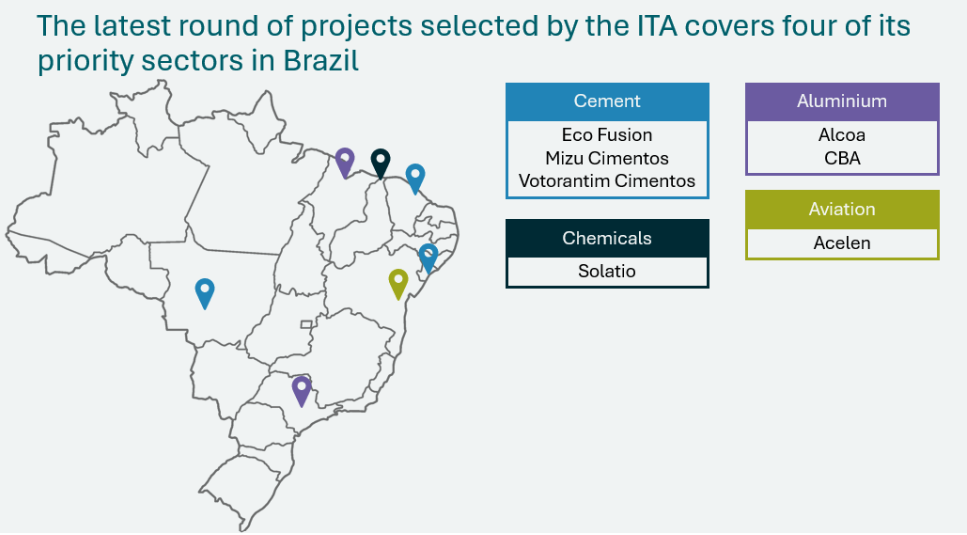
The ITA has announced seven new clean industrial projects it will support in partnership with the Brazilian Ministry of Development, Industry, Commerce, and Services (MDIC), joining four previously selected projects.
The latest projects stand out for high potential in tackling emissions across four of the ITA’s priority sectors in Brazil: chemicals, aviation, aluminium and cement. (For more depth, read our mini-series focusing on these across three issues of Signal).
Collectively, these projects represent an investment potential exceeding $7.5 bn.
They will now receive bespoke support from the ITA to identify barriers and mobilise domestic and international industry to overcome them, unlocking the clean energy, demand and finance solutions to help them advance toward final investment decisions (FID).
Targeted clean industrial solutions
The chemical and aviation sectors’ projects are large new facilities which could make products with significantly lower emissions compared to conventional equivalents:
- The Solatio H2 Piauí project has developed 14 GW of renewables to supply a 3 GW grid-connected industrial plant of green hydrogen and ammonia under development. Production capacity: 2.2 million tonnes per annum (Mtpa) of green ammonia by 2030
- Acelen Renewables will make advanced renewable fuels from the oil of Brazil’s native macauba plant, from plant germination to biorefining. The target: 1 bn litres of fuels annually, including sustainable aviation fuel (SAF) and renewable diesel (HVO)
The other five projects and their ITA selection were publicly announced for the first time earlier this summer. All address existing production facilities in the cement or aluminium sectors.
- Votorantim Cimentos plans to reactivate a 0.32 Mtpa calcined clay production line, allowing it to increase the use of this substitute for emissions-intensive clinker and reduce emissions of its cement by up to 16%
- Mizu Cimentos seeks to install pyrolysis units at their 1 Mtpa facility in Aracaju to produce energy from waste biomass to substitute fossil fuel use. When fully implemented, the project could reduce emissions from cement production by up to 32%
- The Eco Fusion consortium seeks to install gasifiers at the Apodi cement factory in Quixeré, producing energy from waste as a substitute for fossil fuel. Post-pilot stages of the project could reduce emissions by up to 10% per tonne of cement
- Alcoa aims to cut the emissions of its heat generation for alumina refining via a project electrifying the boilers at their Alumar refinery in São Luis. This could reduce the emissions of the final aluminium to as little as 0.6 tonnes of CO2 per tonne of aluminium
- CBA is working to tackle process emissions from aluminium smelting through a pioneering Carbon Capture, Utilisation and Storage (CCUS) technology. If applied at scale to its 0.43 mtpa smelter in Alumínio, it could cut its aluminium emissions to below 2 t CO2 per tonne of metal.
Brazil was the first country partner of the ITA, with additional country partnerships now also underway in the Middle East and North Africa (MENA) region.
For all the details about the initiative, please see the full press release here.
HUBS | learnings from our US Clean Industrial Hubs that can be applied around the world
The pipeline of announced clean projects globally is promising, counting ~700 commercial-scale projects spanning almost 70 countries around the world. However, the pace of conversion to FID needs to accelerate to unlock the full socio-economic benefits of clean industry.
Many of these plants will be in regional industrial hubs, or clusters, where there is the physical, social, regulatory and economic infrastructure to support rapid scale-up. These clustered industries, infrastructure and supply chains work together to share low-carbon tech, energy and resources – fostering competitiveness and resilience.
Between 2022 and the end of 2024, RMI and Mission Possible Partnership, with support from the Bezos Earth Fund, accelerated the development of clean industrial hubs in California and Texas through our US Clean Industrial Hubs programme. It was a test case to see if it is possible to accelerate projects to FID with targeted support.
We partnered with 18 FOAK clean projects to grow regional economies, strengthen local workforces and protect energy security, while reducing their industries’ environmental impacts.
Not only did 50% of the projects reach final investment decision (FID), but once built, they will mobilise an additional $25 bn in public and private investment, benefiting the local communities where they are situated.
Why industrial hub communities are effective
Why has this approach proven so effective? From working closely with project developers on the ground, three issues that can be uniquely addressed through collaboration at the level of an industrial hub stick out:
- The development of a shared ambition across a local business community that can embolden corporate leaders and galvanise support from local and state policymakers
- The planning and buildup of a clean energy infrastructure commensurate with the aggregated needs of all local industry players
- The engagement of the local community to boost the benefits of the clean transformation of industrial activities for the people who live and work in the area
As with all communities, location is key.
We chose to work in California and Texas as both had a significant baseline of industrial activity, high demand for industrial products and enough projects and organisations to drive the work forward.
In Texas, we leveraged Houston’s acumen in clean energy, manufacturing and heavy industry to focus on accelerating the production and adoption of clean hydrogen and its derivatives to enable decarbonisation in the cement, shipping, steel and aviation sectors.
Meanwhile, in Southern California, our team has advanced clean solutions for heavy transportation and ports, low-emissions cement production, green hydrogen and industrial electrification by providing technical assistance to ten proposed FOAK projects.
Key learnings for hub locations worldwide
After these successes, we aim to catalyse stakeholders in other geographies to take the lessons we have learned and advance clean hubs globally.
Our preliminary analysis identifies 40 locations that are the most promising clean industrial hubs worldwide, from Kawasaki city in Japan and Kakinada port in India to Humber in the UK and Acu port in Brazil. These clean hubs could bring huge socio-economic opportunities to each region.
Some are promising supply hubs with the right conditions to provide clean hydrogen, alternative fuels and clean industrial production. Demand hubs have the right conditions and potential purchasing power to import significant amounts of these products. Some fit both descriptions.
Regardless of the function or location, there are many parallels in what is needed to create successful clean industrial hubs and unlock the projects within them.
That’s why we have shared an in-depth report outlining our lessons learned for doing so, illustrated with case studies from our experiences in Texas and California.
Access the full report for all of our insights here.
CALCINED CLAY | cleaner concrete and cement with calcined clay
Concrete and cement are ubiquitous; they are the second most used resource on earth after water and as construction around the world continues at pace, use of concrete and cement is estimated to increase almost 50% by 2050 if no efficiency gains are made (Mission Possible Partnership 2023, Concrete and Cement Transition Strategy). Calcined clay has the potential to play a critical role in the transformation of the concrete and cement sector to a clean industry.
This low-cost processed clay material, along with limestone, can replace cement clinker reducing energy costs by over 33% and drive down CO2 emissions by over 40% compared to ordinary Portland cement.
Alongside partners at Systemiq, we have been exploring how to accelerate the production of, and demand for, calcined clay.
Calcined clay is a drop-in solution to existing supply chains. It has demonstrated its high performance and scalability in infrastructure projects from Switzerland to Colombia and is abundantly available. Our initiative explored opportunities for fast emissions reduction by accelerating its production and consumption in Türkiye and the Middle East and North Africa (MENA) region.
Türkiye is well positioned for adoption as both the world’s third largest clay producer and the second largest exporter of cement. A large part of which will be exposed to the EU’s Carbon Border Adjustment Mechanism, as well as Türkiye’s own Emissions Trading System from 2026.
In addition, it has a large local demand, which has increased in recent years as reconstruction efforts have come into effect following the intense earthquake that struck large swathes of Türkiye in 2023.
Saudi Arabia also has excellent potential thanks to suitable clay reserves, growing domestic cement demand and a pipeline of construction megaprojects like NEOM. It also benefits from low-cost capital due to its sovereign wealth fund and a declining supply of alternative cement replacements.
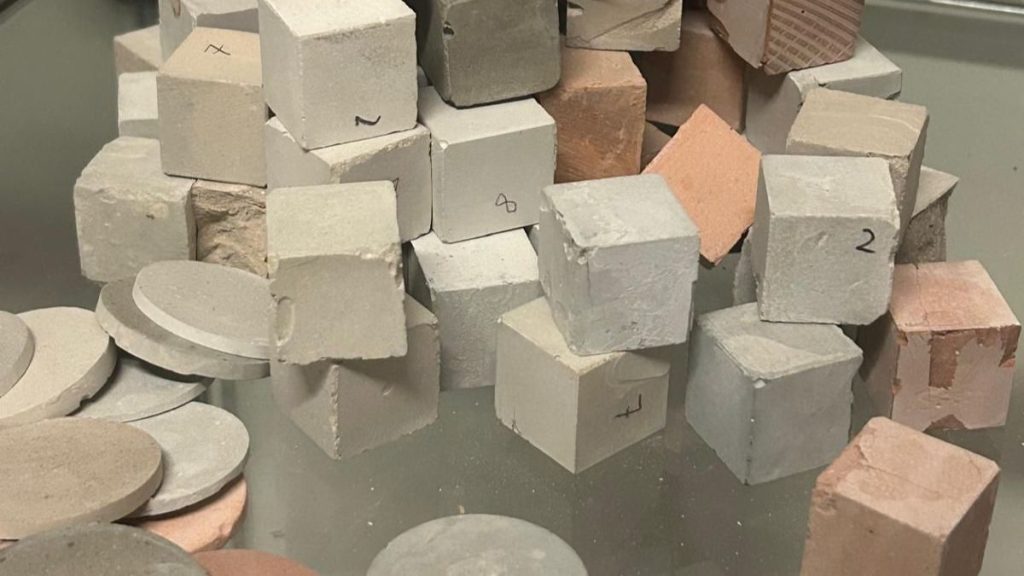
Calcined clay has the potential to play a critical role in the transformation of the concrete and cement sector to a clean industry.
The steps to scale
Currently, the upfront investment requirements, market perceptions and the absence of consideration in building and concrete standards have created barriers to reaching a tipping point for the scale-up of calcined clay.
Based on over 50 conversations with industry stakeholders, we identified five initiatives to stimulate supply and demand for limestone and calcined clay-based cement. These are:
- Improving perceptions by launching an awareness campaign for stakeholders in the cement value chain – from governments to developers and financiers
- Enabling large-scale production by creating a demand signal that expresses intent to work with calcined clay, i.e. a joint letter of intent on calcined clay from many companies
- Influencing policy by working collaboratively to develop short-term policy requests that align across public and private priorities
- Use flexible simulation tools to test business case scenarios to inform and validate investment decisions
- Showcasing potential by bringing together a consortium of developers to focus on delivering a regional lighthouse project
FIGURES IN FOCUS
Current and potential locations for clean industrial hubs
Our preliminary analysis has identified 46 locations that are the most promising to be clean industrial hubs. Some of these locations are supply hubs, others are demand hubs – and some possess the conditions for both.
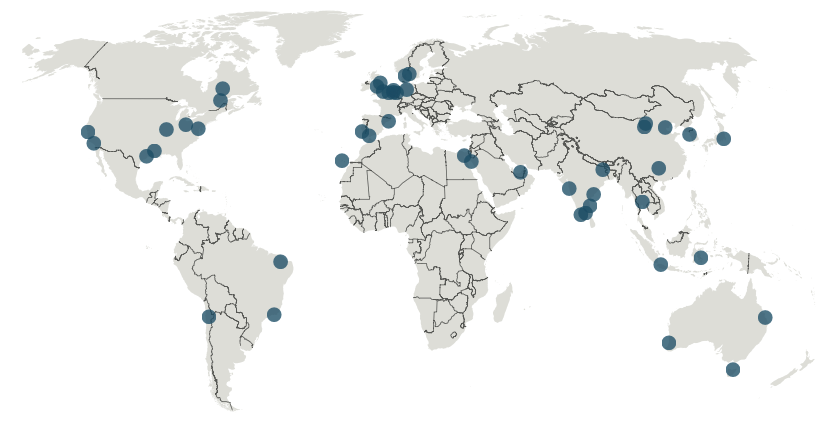
Source: Mission Possible Partnership May 2025, Unlocking First-of-a-Kind Projects through Clean Industrial Hubs
UPCOMING EVENTS AND PARTNERSHIPS
Hear more from MPP at events and access tickets on related conferences from our partners.
- Clean Energy Ministerial 16 and Mission Innovation 10 (25-27 August, Busan, Republic of Korea)
- MPP Chair, Dick Benschop, MPP Director of Industrial Decarbonisation, Rachel Howard, and ITA Standards Lead, Dan Hayes, will be attending the three-day convening, where our team is co-hosting side events on Clean steel‘s transition in APAC, Global industrial deep decarbonisation leaders, and Harmonisation of GHG accounting standards.
- World Climate & Biodiversity Summit (25 September, New York)
- Join MPP at the Summit during Climate Week NYC by registering at this link and using code MPP2025 for a discount on your pass.
- Economist Impact: Sustainability Week Europe (6-7 October, Amsterdam)
- Join MPP at Sustainability Week Europe to explore how technology can reduce emissions and drive profitable, sustainable business transformation. Register at this link and use code MPP-SWE20 for a discount on your pass.
- Climate & Impact Summit North America (22 October, New York)
- MPP is a supporting partner of the Financial Times’ Climate & Impact Summit North America, where leaders in business, finance and policy will convene to engage and create actionable strategies to drive investment, innovation, and policy alignment for a sustainable future following the theme, Sustainability and the Growth Agenda. Get 20% off on passes with code MISSION when you
- Economist Impact: Sustainability Week Africa (30-31 October, Cape Town)
- Join MPP at the 2nd annual Sustainability Week Africa to explore how Africa’s green transition fuels inclusive and climate-smart prosperity. Register at this link and use code MPP-SWA20 for a discount on your pass.
Thank you for reading, if you enjoyed this newsletter, please share it with your network.
If this edition of Signal was shared with you, you can sign up for our monthly mailings here.
The Mission Possible Partnership Team