California is a national leader in climate action with state mandates to achieve net zero emissions by 2045.

California is a national leader in climate action with state mandates to achieve net zero emissions by 2045. Yet, California is the third largest industrial emitter in the United States, driven by the state’s refineries, heavy duty trucks, airports, and ports. In 2022, industrial facilities in California released more than 80 million metric tons CO2, 6% of all industrial emissions in the United States.
Meeting our collective global climate goals requires building more than 700 net-zero industrial projects by 2030 and purchasing 7 million zero-emissions trucks by 2030. Most of these projects will occur in regional industrial hubs where the physical, social, regulatory and economic infrastructure is in place to support rapid scale up – places like California.
That’s why Mission Possible Partnership and RMI, in collaboration with the Bezos Earth Fund, are working to create a clean industrial hub in California to advance heavy transportation and ports decarbonisation, cement plant decarbonisation, green hydrogen, and industrial electrification.
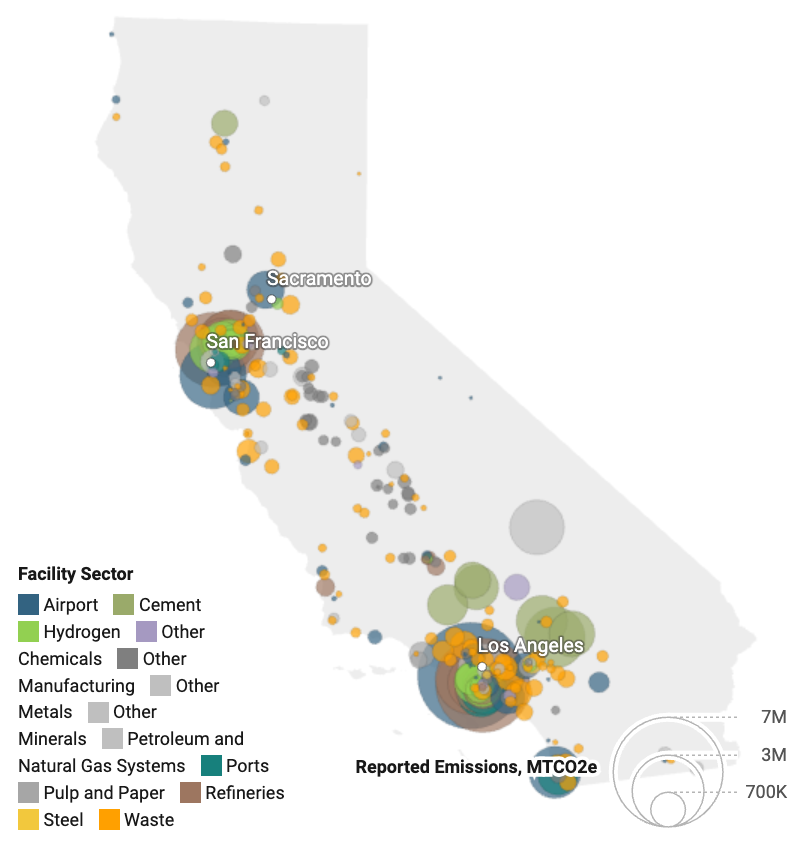
Excludes freight transportation emissions. Aviation emissions data sourced from ClimateTRACE. Port emissions calculated by RMI. Source: EPA GHGRP, 2021 Created with Datawrapper
As the U.S.’s largest state economy and third largest industrial emitter, California is poised to lead the energy transition through strong environmental regulations and high demand for sustainable products. The region’s industrial sector creates substantial economic value. Economic activity at the Ports of Los Angeles and Long Beach support three million jobs nationally and manufacturing contributes 11% to California’s GDP.
Yet industry and heavy transport sectors like trucking, shipping, and aviation, contribute nearly 30% of all emissions in the State.
The good news is, California is also a leader in industrial decarbonisation and clean fuels development in the United States. California also has a comprehensive policy framework targeting net-zero emissions by 2045, supported by key legislation for zero emissions vehicles, a low-carbon fuel standard, cap-and-trade program, and buy clean act. These policies along with federal and state grants, loans, and tax incentives, are catalysing a wave of project development in the state.
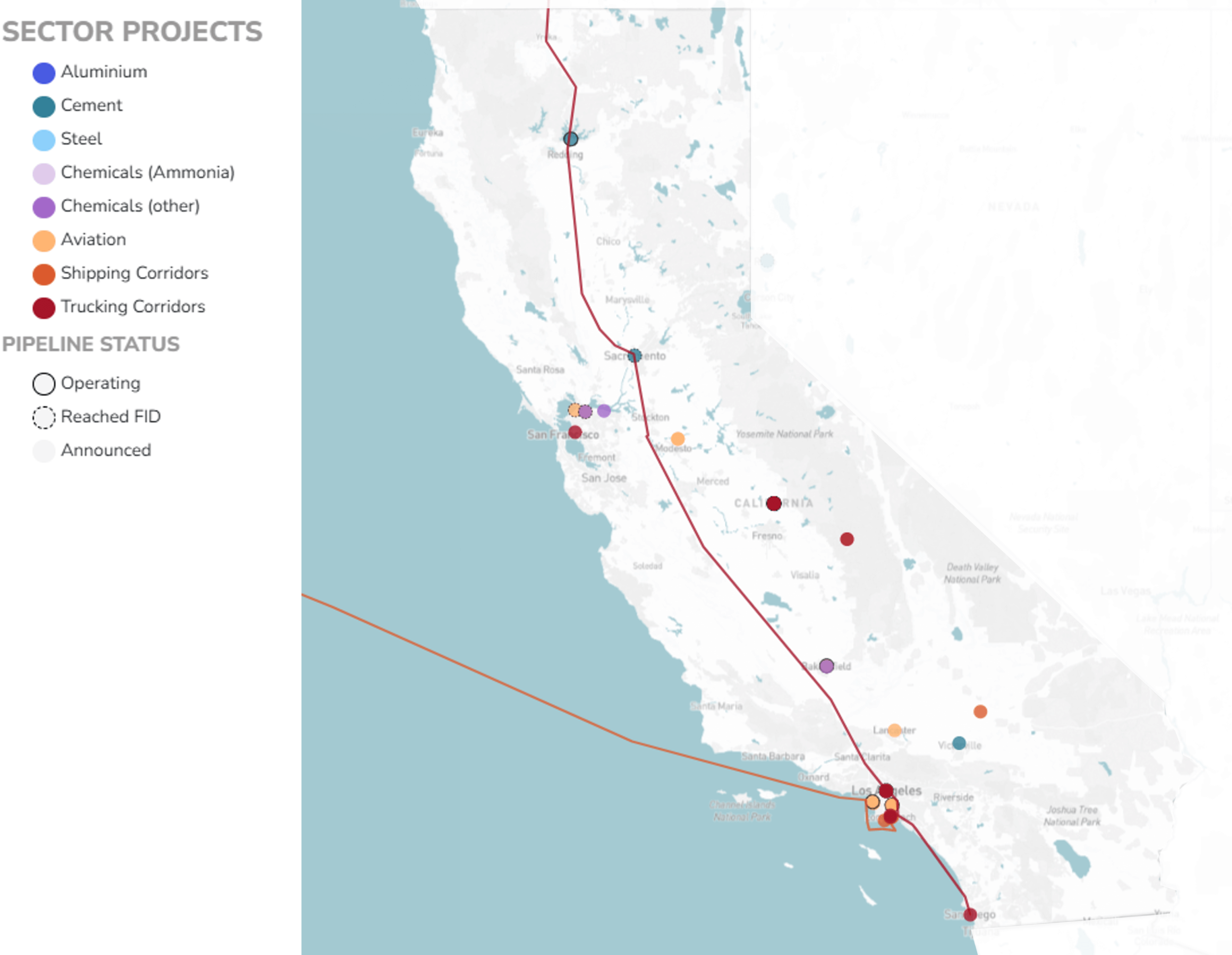
As of November 2024 date, there are 24 public proposed decarbonisation projects in California spanning four sectors. Only four are operational and a further three have investment. The ARCHES Hydrogen announced an investment of $11.4 billion in public and private matching funds to complement $1.2 billion awarded by the DOE to support 10 hydrogen production projects and offtake projects across ports, trucking, shipping, and power.
Building on California’s enabling policies, clean energy, and clean tech and environmental leadership, the State can innovate solutions, meet its 2045 decarbonisation goals, and lead on the industrial transition. That’s why we’ve been supporting a clean industrial hub focusing on decarbonising heavy transportation and cement.
Clean industrial hubs bring together project developers, policymakers, financial institutions, and community-based organisations to support regional clusters of industrial decarbonisation projects.


Decarbonisation Projects
First-of-a-Kind (FOAK) and Nth-of-a-Kind (NOAK) decarbonisation projects across industry heavy transport, and clean energy sectors.

Ecosystem
A strong foundation of policy, finance, research, and community engagement to improve outcomes and accelerate progress of FOAK/NOAK projects and other efforts needed for industrial decarbonisation.

Connective Infrastructure
Safe, efficient, and resilient methods to deliver clean energy from producers to consumers.
Mission Possible Partnership and RMI have been focused on accelerating low-carbon solutions for industry and heavy transport by providing technical assistance to 10 first-of-a-kind (FOAK) decarbonisation projects in California.
This work included identifying and advancing decarbonisation pathways for ports, heavy duty trucks, and existing industrial facilities, such as cement. We also worked on accelerating production and adoption of sustainable aviation fuel and clean hydrogen to enable decarbonisation in the aviation, shipping, and trucking sectors.
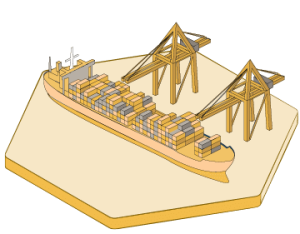
Decarbonising ports and shipping are essential to meet California’s climate goals and maintain economic competitiveness. We calculated the total cost of ownership for zero-emissions cargo handling equipment and costs for terminal operators at the Ports of Los Angeles and Long Beach to fully convert their equipment to zero-emissions by 2030. We analysed zero-emissions fuel supply options for ports and feasibility of green shipping corridors.
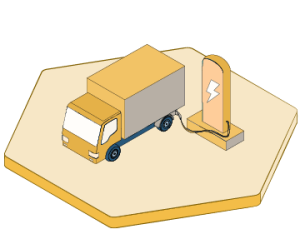
By 2035, all drayage trucks at California ports must be zero-emissions and by 2045, all truck sales in California must be zero-emissions vehicles. We supported the transition to zero-emissions trucking by evaluating the total cost of ownership of electric and hydrogen trucks, working with ports and local governments to increase financial incentives to reduce the cost premium of purchasing zero-emissions trucks, and identified pathways to scale up charging infrastructure for electric trucks.
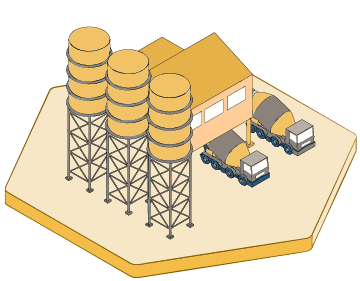
Cement plants in California must achieve net-zero emissions by 2024. Just 7 cement plants in California emitted 7 million mt CO2e in 2023. We identified pathways for two clinker facilities to achieve net-zero emissions by 2045 through integrated site decarbonisation utilising three key levers -alternative fuels, supplementary cementitious materials (SCMs), and carbon capture and storage (CCS). We then helped the company identify public funding opportunities to offset the cost premium.
Sustainable aviation fuel can help reduce aviation emissions by 50% or more. California’s legacy of refining presents an opportunity to produce SAF and other low-carbon fuels. We evaluated production pathways including HEFA (hydroprocessed esters and fatty acids) and PtL (power-to-liquids) for two different SAF producers and identified cost-effective ways to reduce carbon intensity. We worked with financial institutions to identify solutions to common financing barriers for SAF projects.
Hydrogen is an essential lever for industrial decarbonisation in California. We analysed the costs, technology readiness, and public funding available for two green hydrogen producers in California.
Industrial electrification is essential for decarbonise California’s existing industries and to support new ones. We evaluated state and federal incentives for industrial electrification projects and potential to scale thermal heat batteries to ~50 facilities in California.
RMI with Mission Possible Partnership have developed tools, hosted workshops, and conducted innovative research to support the essential ecosystem of policy, finance, infrastructure, and community engagement needed for success in California.

Policy support and public funding is critical to enabling industrial decarbonisation in California. We identified solutions to barriers to siting and permitting truck charging depots and industrial projects in California. We created tools to help project developers, industrial companies, and investors discover the state and federal financial incentives that may be applicable to their industry and heavy transport projects.

Mobilising private capital is essential to helping decarbonisation projects reach a final investment decision and be built. We convened financial institutions including banks, private equity, and other investors to identify solutions to bankability challenges for green hydrogen and sustainable aviation fuel. We developed the Industrial Decarbonisation Investor database which catalogues over 200 institutions that have expressed interest in and/or closed transactions related to industrial decarbonisation.
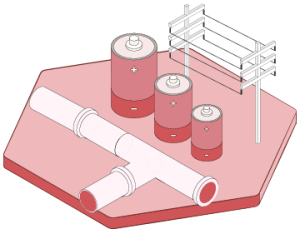
Midstream infrastructure -including electric transmission lines, hydrogen pipelines, and energy storage- is essential for clean energy to reach industrial facilities. We evaluated energy supply and midstream infrastructure, i.e., transmission lines and pipelines, needed for California’s industrial sector to achieve net-zero emissions by 2045.

Equity and inclusive, two-way community engagement are essential in decarbonisation efforts by clean energy and infrastructure project developers. We held workshops for project developers to develop community engagement strategies and learn best practices for developing Community Benefits Plans and Community Benefits Agreements. We interviewed members of community based organisations, labour groups, and other NGOs about effective practices, challenges, and opportunities for improvement in implementing Community Benefit Plans.
Discover progress
Texas Gulf Coast | insight
Learn more
Clean Industrial hubs | introduction